Pupil Well-being
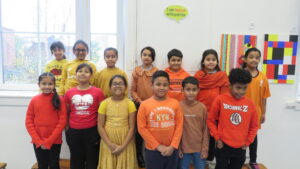
Childrens Mental Health Week
Brain Buddy Sessions
Year 6 have Brain Buddy sessions with Ella
Brain Buddies is an emotional regulation programme, aiming to improve children’s emotional literacy and create strategies they can use with adults around them to help express and manage their emotions.
For children aged 9—11 years old.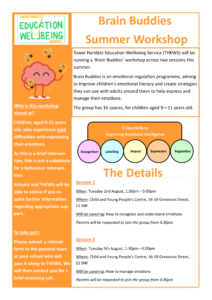
School Nurse
School nurses are specialist community public health nurses (SCPHN) who work with school-aged children and young people and their families to improve health and wellbeing outcomes and reduce inequalities and vulnerabilities.
School nurses are NMC-registered nurses or midwives who have undertaken additional training and qualifications to become specialist community public health nurses (SCPHN – SN). School nurses lead the Healthy Child Programme: 5-19 and are fundamental in ensuring every child has the best start in life.
Strep A and Scarlet fever
What are scarlet fever and Strep A?
Scarlet fever is caused by bacteria called Group A streptococci (Strep A). The bacteria usually cause a mild infection that can be easily treated with antibiotics.
In very rare occasions, the bacteria can get into the bloodstream and cause an illness called invasive Group A strep (iGAS).
How can I prevent Strep A?
Good hand and respiratory hygiene are important for stopping the spread of many bugs.
By teaching children how to wash their hands properly with soap for 20 seconds, using a tissue to catch coughs and sneezes, and keeping away from others when feeling unwell, they will be able to reduce the risk of picking up or spreading infections.
What are the symptoms of Strep A/scarlet fever?
Symptoms can include a sore throat, headache, and fever, along with a fine, pinkish or red body rash with a sandpapery feel. On darker skin, the rash can be more difficult to detect visually but will have a sandpapery feel.
My child is unwell and may have scarlet fever – what should I do?
If your child becomes unwell with these symptoms, you should contact your GP practice or contact NHS 111 (which operates a 24/7 service) to seek advice.
It is important to contact NHS 111 or your GP if you suspect your child has scarlet fever, because early treatment of scarlet fever with antibiotics is important to reduce the risk of complications such as pneumonia or a bloodstream infection.
You must tell NHS 111 or your GP if you or your child have been in contact with someone who has had Strep A recently.
If your child has scarlet fever, keep them at home until at least 24 hours after the start of antibiotic treatment to avoid spreading the infection to others.
As a parent, if you feel that your child seems seriously unwell, you should trust your own judgement. Contact NHS 111 or your GP if:
- your child is getting worse
- your child is feeding or eating much less than normal
- your child has had a dry nappy for 12 hours or more or shows other signs of dehydration
- your baby is under 3 months and has a temperature of 38C, or is older than 3 months and has a temperature of 39C or higher
- your baby feels hotter than usual when you touch their back or chest, or feels sweaty
- your child is very tired or irritable
Call 999 or go to A&E if:
- your child is having difficulty breathing – you may notice grunting noises or their tummy sucking under their ribs
- there are pauses when your child breathes
- your child’s skin, tongue or lips are blue
- your child is floppy and will not wake up or stay awake.
for more information please visit The Education Hub
Is my child to unwell to attend school?
It can be tricky deciding whether or not to keep your child off school, nursery or playgroup when they’re unwell.
There are government guidelines for schools and nurseries about managing specific infectious diseases at GOV.UK. These say when children should be kept off school and when they shouldn’t.
If you do keep your child at home, it’s important to phone the school or nursery on the first day. Let them know that your child won’t be in and give them the reason.
If your child is well enough to go to school but has an infection that could be passed on, such as a cold sore or head lice, let their teacher know.
Other illnesses – Follow this advice if your child does not have coronavirus symptoms or they had a test and it was negative (they do not have coronavirus).
Coughs and colds – It’s fine to send your child to school with a minor cough or common cold. But if they have a fever, keep them off school until the fever goes. Encourage your child to throw away any used tissues and to wash their hands regularly.
High temperature – If your child has a high temperature, keep them off school until it goes away.
Chickenpox – If your child has chickenpox, keep them off school until all the spots have crusted over. This is usually about 5 days after the spots first appeared.
Cold sores – There’s no need to keep your child off school if they have a cold sore. Encourage them not to touch the blister or kiss anyone while they have the cold sore, or to share things like cups and towels.
Conjunctivitis – You don’t need to keep your child away from school if they have conjunctivitis. Do get advice from your pharmacist. Encourage your child not to rub their eyes and to wash their hands regularly.
Coronavirus (COVID-19) – Your child should try to stay at home and avoid contact with other people if they have symptoms of COVID-19 and they either:
- have a high temperature
- do not feel well enough to go to school or do their normal activities
If they have mild symptoms and they feel well enough, they can still go to school.
Ear infection – If your child has an ear infection and a high temperature or severe earache, keep them off school until they’re feeling better or their high temperature goes away.
Hand, foot and mouth disease – If your child has hand, foot and mouth disease but seems well enough to go to school, there’s no need to keep them off. Encourage your child to throw away any used tissues straight away and to wash their hands regularly.
Head lice and nits – There’s no need to keep your child off school if they have head lice. You can treat head lice and nits without seeing a GP.
Impetigo – If your child has impetigo, they’ll need treatment from a GP, often with antibiotics. Keep them off school until all the sores have crusted over and healed, or for 48 hours after they start antibiotic treatment. Encourage your child to wash their hands regularly and not to share things like towels and cups with other children at school.
Ringworm – If your child has ringworm, see your pharmacist unless it’s on their scalp, in which case you should see a GP. It’s fine for your child to go to school once they have started treatment.
Scarlet fever – If your child has scarlet fever, they’ll need treatment with antibiotics from a GP. Otherwise they’ll be infectious for 2 to 3 weeks. Your child can go back to school 24 hours after starting antibiotics.
Slapped cheek syndrome (fifth disease) – You don’t need to keep your child off school if they have slapped cheek syndrome, because once the rash appears, they’re no longer infectious. If you suspect your child has slapped cheek syndrome, take them to see a GP and let their school know if they’re diagnosed with it.
Sore throat – You can still send your child to school if they have a sore throat. But if they also have a high temperature, they should stay at home until it goes away. A sore throat and a high temperature can be symptoms of tonsillitis.
Threadworms – You don’t need to keep your child off school if they have threadworms. Speak to your pharmacist, who can recommend a treatment.
Vomiting and diarrhoea – Children with diarrhoea or vomiting should stay away from school until they have not been sick or had diarrhoea for at least 2 days (48 hours).
Flu Vaccination UK
Every year Vaccination UK visit the school to offer the free flu vaccine to all eligible children from reception to year 6. The nasal flu vaccine is painless, quick and side effects are uncommon and generally mild. All pupils in special needs schools are eligible for the influenza immunisation.
For parents who want their child to have the vaccine that does not contain porcine gelatine, you can do this by opting in for the injection instead.
UNICEF Outright Project 2022 - 2023
SPEAK OUT ON CHILDREN’S RIGHT TO HEALTH!
We signed up to OutRight 2022/23 to empower children and young people to realise their own rights, and speak out in support of the rights of all children.
The campaign focused on children’s right to the best possible health, all around the world.


Previous Campaigns
Over the years children and young people taking part in OutRight have learned about and spoken up on issues including:
- mental health and wellbeing
- the rights of refugee children
- air pollution
- the 30th anniversary of the UN Convention on the Rights of the Child
- climate change
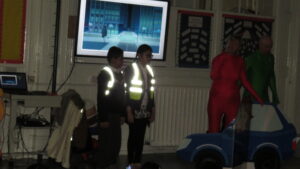
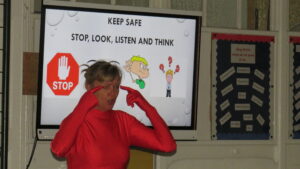
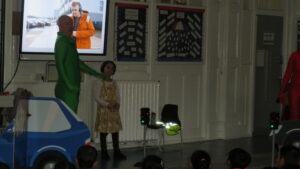
Road Safety Workshop
Road crashes are the biggest killer of young people worldwide. Schools play a key role in preventing road casualties and enabling children, families and everyone to use roads without being endangered.
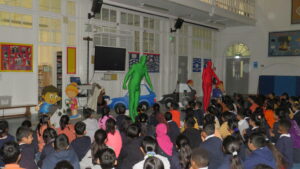
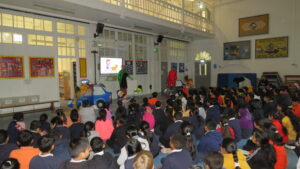
Pupil’s took part in Road Saftey Workshop.


Anti - Bullying & Friendship Week: Reach Out
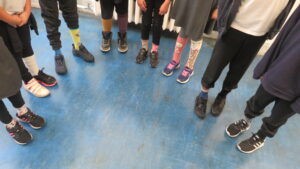
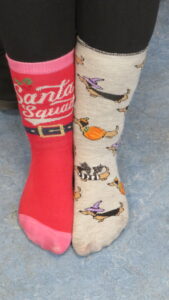
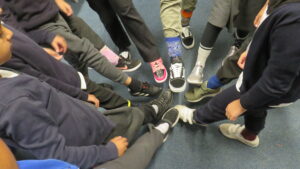
Anti-Bullying Week 2022 was coordinated in England and Wales by the Anti-Bullying Alliance. It took place from 14th to 18th November and had the theme Reach Out. The week was kicked off with Odd Socks Day on Monday 14th November, where adults and children wore odd socks to celebrate what makes us all unique.
The theme of Reach Out came about following consultation with teachers and pupils by the Anti-Bullying Alliance which coordinates Anti-Bullying Week every year in England and Wales. Teachers and children wanted a theme that empowered them to do something positive to counter the harm and hurt that bullying causes.